
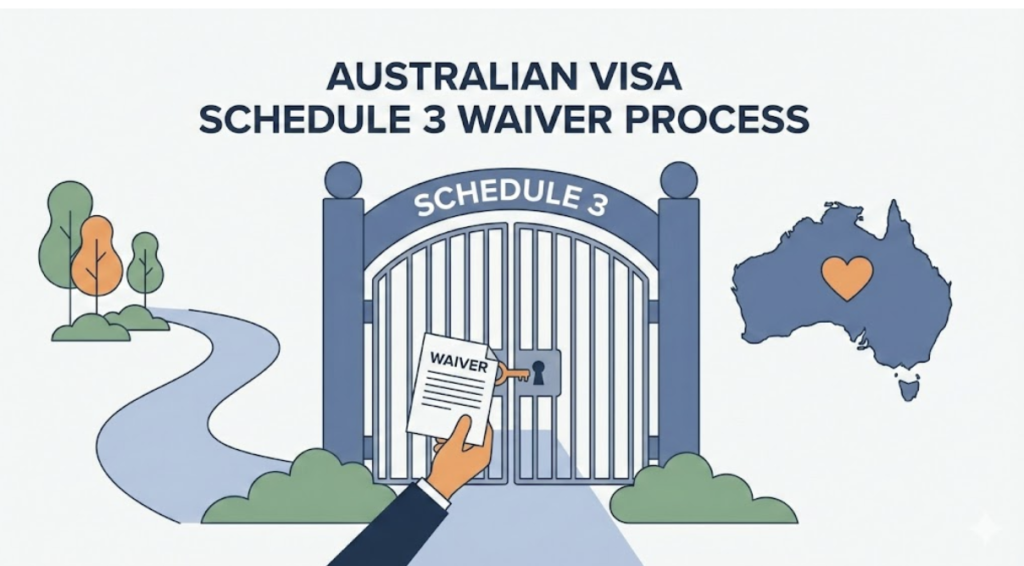
If you are reading this, chances are you or your partner are currently in Australia without a substantive visa, and you’re looking to apply for a Partner Visa. You’ve probably stumbled across the term “Schedule 3,” and it has left you feeling completely overwhelmed.
First, take a deep breath.
As migration lawyers, we sit down with couples every single week who are terrified that a visa expiry or a Bridging Visa status means they will be forced apart. The rules are strict, and the stakes are incredibly high, but you do not have to figure this out alone. Let’s sit down, grab a coffee, and walk through exactly what Schedule 3 means for your relationship—and how you can handle it.
What is Schedule 3?
In plain English, Schedule 3 is a set of extra requirements you must meet if you are applying for an onshore Partner Visa (Subclass 820/801) and you do not hold a “substantive visa” at the time you apply.
A substantive visa is basically any visa other than a Bridging Visa, a Criminal Justice visa, or an Enforcement visa. So, if your tourist visa expired a week ago, or you have been living on a Bridging Visa while waiting for an appeal, Schedule 3 applies to you.
The Australian government uses Schedule 3 to discourage people from staying in Australia unlawfully or using the Partner Visa system as a last-resort way to stay in the country. If you fall into this category, you cannot just lodge a standard Partner Visa application. You must also prove that there are compelling reasons for the government to waive the Schedule 3 requirements.
It’s highly recommended to check your current visa conditions using VEVO (Visa Entitlement Verification Online) before lodging any new application.
The Schedule 3 Waiver: Proving “Compelling Reasons”
If you don’t meet the standard Schedule 3 criteria, you need a waiver. To get a Schedule 3 waiver Partner Visa in Australia, you must convince the Department of Home Affairs that “compelling reasons” exist for not applying offshore.
This is where things get heavily scrutinized. The Department does not hand out these waivers lightly.
What might count as a compelling reason?
- Australian Citizen Children: If you and your partner have an Australian citizen child, forcing the applicant to leave the country could severely impact the child’s wellbeing.
- Severe Hardship to the Australian Partner: If the Australian sponsor has a serious medical condition and relies heavily on the visa applicant for daily care, this can be heavily weighed.
- Circumstances Beyond Your Control: If an unforeseen event prevented you from applying before your previous visa expired (like a severe accident or sudden hospitalization).
What usually DOES NOT count?
- You simply forgot your visa was expiring.
- Financial loss from buying plane tickets to apply offshore.
- General emotional distress from being separated (the Department views this as a normal consequence of the migration process).
For the exact legal wording, you can review the Schedule 3 criteria on the Department of Home Affairs website.



Why You Should Not Do This Alone
We always tell our clients: standard Partner Visas are hard. Schedule 3 Partner Visas are a completely different beast.
If your waiver is refused, your Partner Visa is refused. This could trigger a Section 48 bar, which prevents you from applying for almost any other visa while you remain in Australia. You could be forced to leave the country, separating your family and costing you thousands of dollars in lost government fees.
You need an expert who knows exactly what case officers are looking for when they read a waiver request.
Frequently Asked Questions (FAQ)